We’ve all seen the videos. The ones where someone spends three hours on a Sunday afternoon washing, chopping, and neatly packing five days of identical, colorful meals into glass containers. It looks beautiful. It looks organized.
But then real life happens. Monday runs late. Tuesday is a disaster. By Wednesday, you are so emotionally and physically exhausted that the thought of cooking, washing a pan, or even chopping an onion feels like climbing Mount Everest.
When you are in "Survival Mode," standard nutrition advice feels like a mockery. You don’t need a recipe; you need a lifeline.
The Danger of the "Friction Tax"
When your energy is at zero, your brain calculates the effort required for every action. We can call this the Friction Tax.
Ordering a pizza: Low friction (three taps on a phone).
Making a balanced meal from scratch: High friction (chopping, cooking, cleaning).
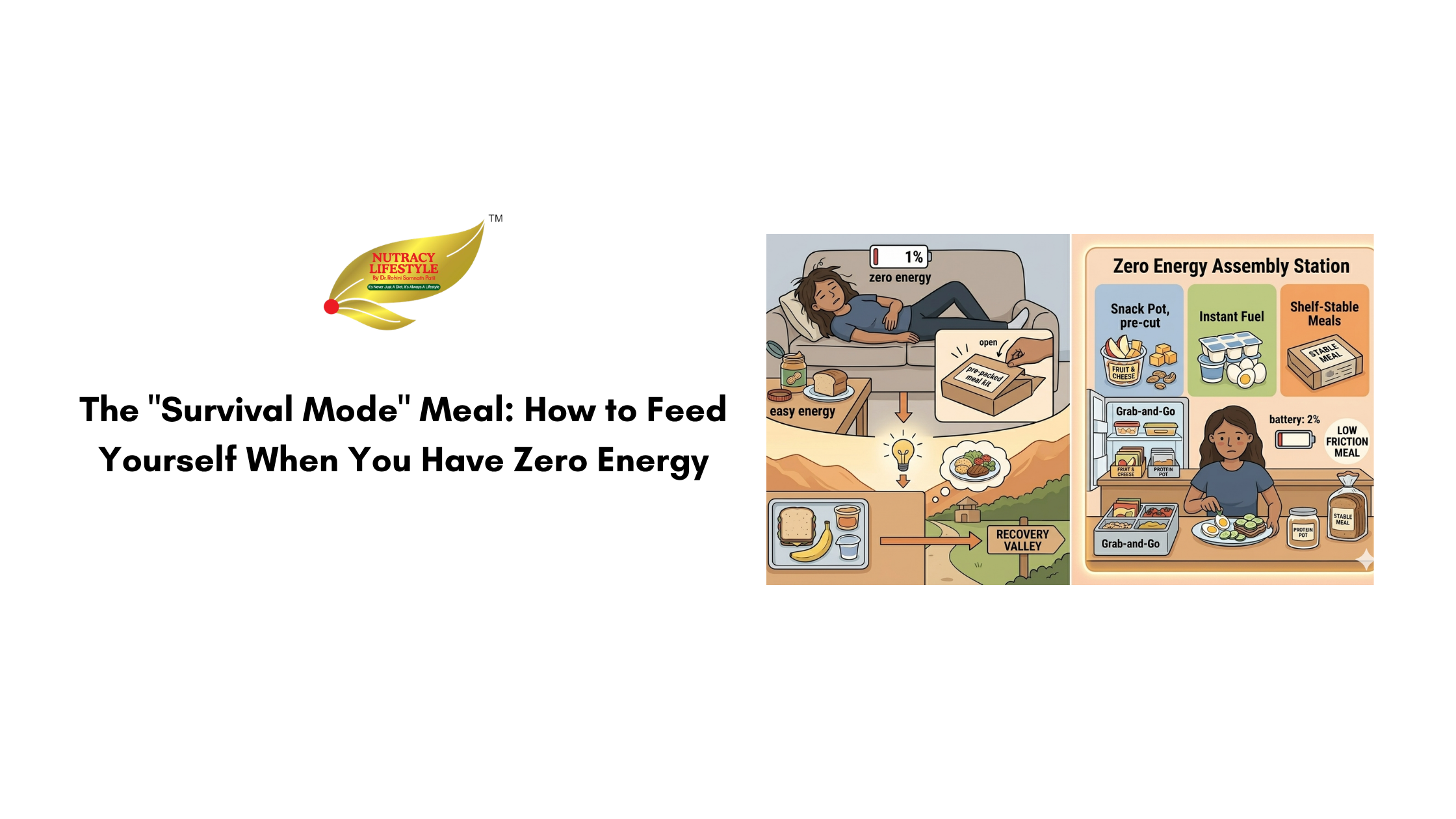
In a high-stress week, low friction wins every single time. The mistake we make is feeling guilty about it, which only adds to our stress levels. The solution isn't to force yourself to be a master chef when you’re exhausted. The solution is to lower the friction of real food so it matches the ease of a delivery app.
The "No-Cook" Nutrition Matrix
You do not need to turn on a stove to give your body what it needs to survive a hard week. You just need to assemble raw components.
When you treat your kitchen like a salad bar rather than a restaurant, a meal takes two minutes to assemble. You aren't "cooking"; you are just putting things in a bowl.
The Three Pillars of an Emergency Plate
When you are putting together a survival meal, stop worrying about "balance" or "perfection." Just make sure your plate hits these three simple marks:
The Anchor (Protein): A scoop of Greek yogurt, a few hard-boiled eggs (boiled in advance or bought ready), a handful of roasted chana, or some paneer. Protein stabilizes your blood sugar so you don’t wake up at 2 AM craving sugar.
The Volume (Fiber): Anything raw that you can wash and bite into. A whole tomato, a cucumber, or a handful of baby spinach. Your gut needs the fiber to handle the stress hormones circulating in your body.
The Comfort (Fat/Carb): A slice of good bread, a handful of nuts, or a drizzle of olive oil. This tells your brain that you are safe, full, and allowed to rest.
3 Rules for the Survival Week
Lower the Standard: A meal of two boiled eggs, a raw cucumber, and a slice of toast with butter is a fantastic, nutrient-dense lunch. It doesn't look like an Instagram post, but your liver, your brain, and your muscles don't care about aesthetics.
Embrace the Frozen Section: Frozen vegetables are often frozen within hours of being picked, meaning they keep their nutrients. Keeping a bag of frozen peas or mixed veggies in your freezer means you always have a green option that requires zero chopping.
The Single-Pan Rule: If you must cook, make it a meal where everything goes into one pot or pan. Fewer dishes to wash means less mental friction before you can finally sit down and rest.
The Takeaway
Health isn't about what you do on your best days; it’s about how you protect yourself on your worst days. When life gets loud, your nutrition should get quiet. Give yourself permission to eat simple, boring, ugly, and easy meals this week. Survival is a perfectly acceptable goal.