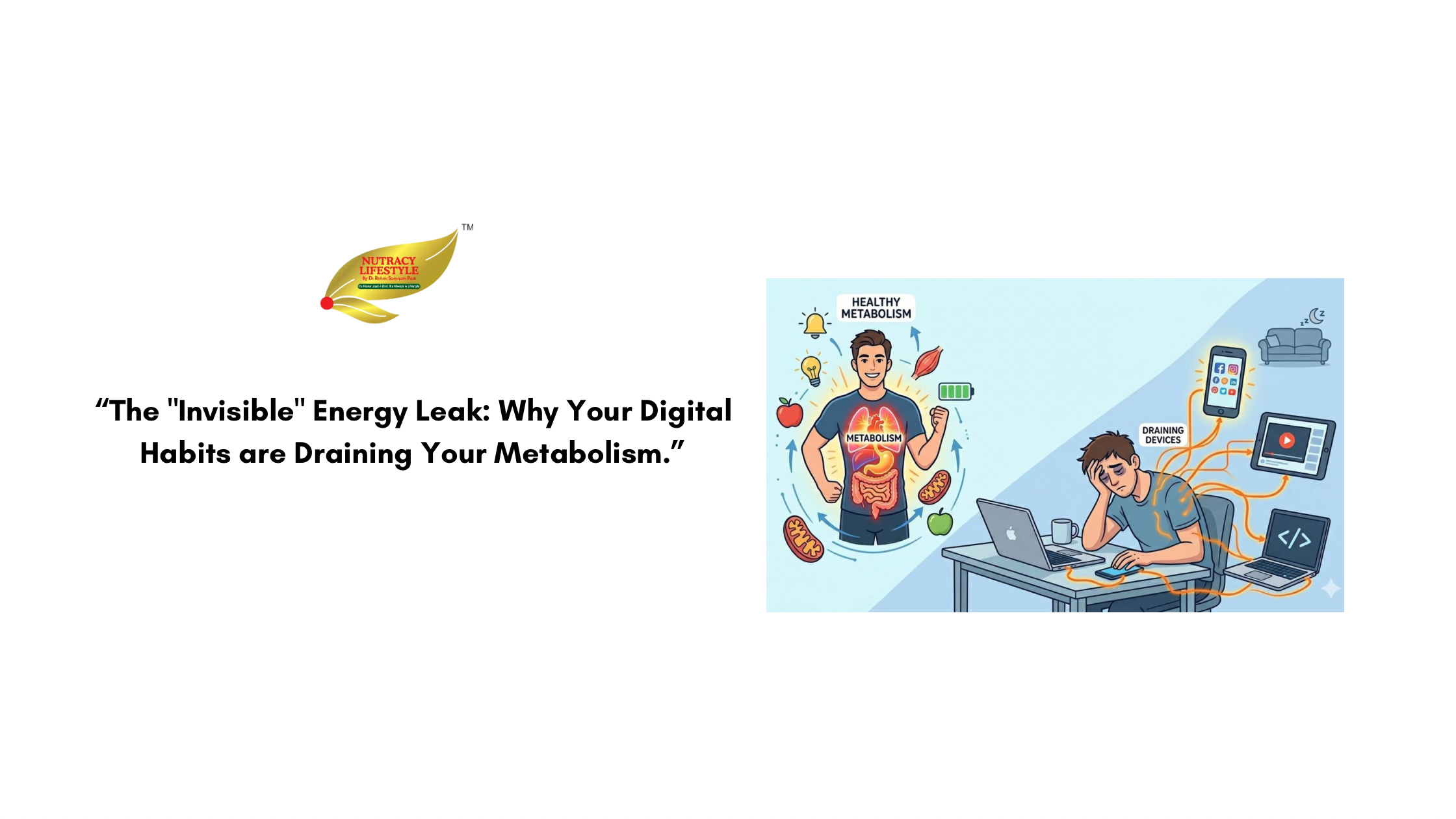
We spend a lot of time talking about what we put into our mouths, but we rarely talk about what we put into our eyes. In the modern world, your digital environment is just as much a part of your "diet" as the food on your plate.
If you find yourself feeling physically exhausted at the end of a day where you sat at a desk, you are likely experiencing a "Digital Energy Leak." Your brain, which represents only about 2% of your body weight, uses up nearly 20% of your daily calories. When you are constantly switching between tabs, scrolling through infinite feeds, and reacting to notifications, your brain is burning through its glucose reserves at an unsustainable rate.
The Brain-Blood Sugar Loop
When your brain is overworked by "digital noise," it sends a panic signal to the rest of your body. It thinks it is in a high-stress survival situation. In response, your body releases cortisol, which tells your liver to dump extra sugar into your bloodstream for a "fight or flight" response that never happens.
Eventually, that sugar level crashes, leaving you feeling shaky, irritable, and most importantly craving high-sugar "quick fixes." You aren't actually hungry; your brain is just looking for a fast way to replenish the energy it spent on a three-hour "scroll-hole."
The ROI of "Deep Work" Breaks
The solution isn't to quit technology; it’s to build "buffers" that protect your biological energy.
By stepping away from the screen for just ten minutes every hour, you allow your brain to exit the "high-beta" wave state (intense focus/stress) and enter a "relax" state. This small pause allows your blood sugar to stabilize and prevents the "false hunger" that leads to overeating in the evening.
The "Analog" Afternoon Reset
If you feel your focus slipping around 3 PM, your brain is likely "overheated" from processing data. Instead of more information (a podcast or news) or more stimulation (caffeine), try an Analog Reset:
- Change Your Focal Length: For most of the day, your eyes are locked on a screen 20 inches away. Go to a window and look at something as far away as possible for two minutes. This relaxes the muscles in your eyes and signals your nervous system to "downshift."
- Tactile Grounding: Touch something with texture—a plant, a wooden desk, or even just washing your hands with cold water. It pulls your energy out of your head and back into your body.
3 Ways to Plug the Energy Leak This Week
- The "Notification Audit": Turn off all non-human notifications. If it’s not a real person trying to reach you, it doesn't deserve to interrupt your biological rhythm.
- The Single-Task Morning: Try to do your first hour of work without opening more than two browser tabs. The less your brain has to "switch," the more energy you'll have left for your workout or your family in the evening.
- The Green Space Rule: If you spend eight hours in front of a screen, try to spend at least twenty minutes in front of something green (a park, a garden, or even indoor plants). Nature has a unique "fractal" pattern that actually helps the human brain recover from cognitive fatigue.
The Takeaway
Your metabolism isn't just about the gym or the kitchen; it's about how you manage your attention. Every time you resist the urge to mindlessly scroll, you are saving "metabolic currency" that you can spend on things that actually make you happy. This week, protect your focus like you protect your plate.