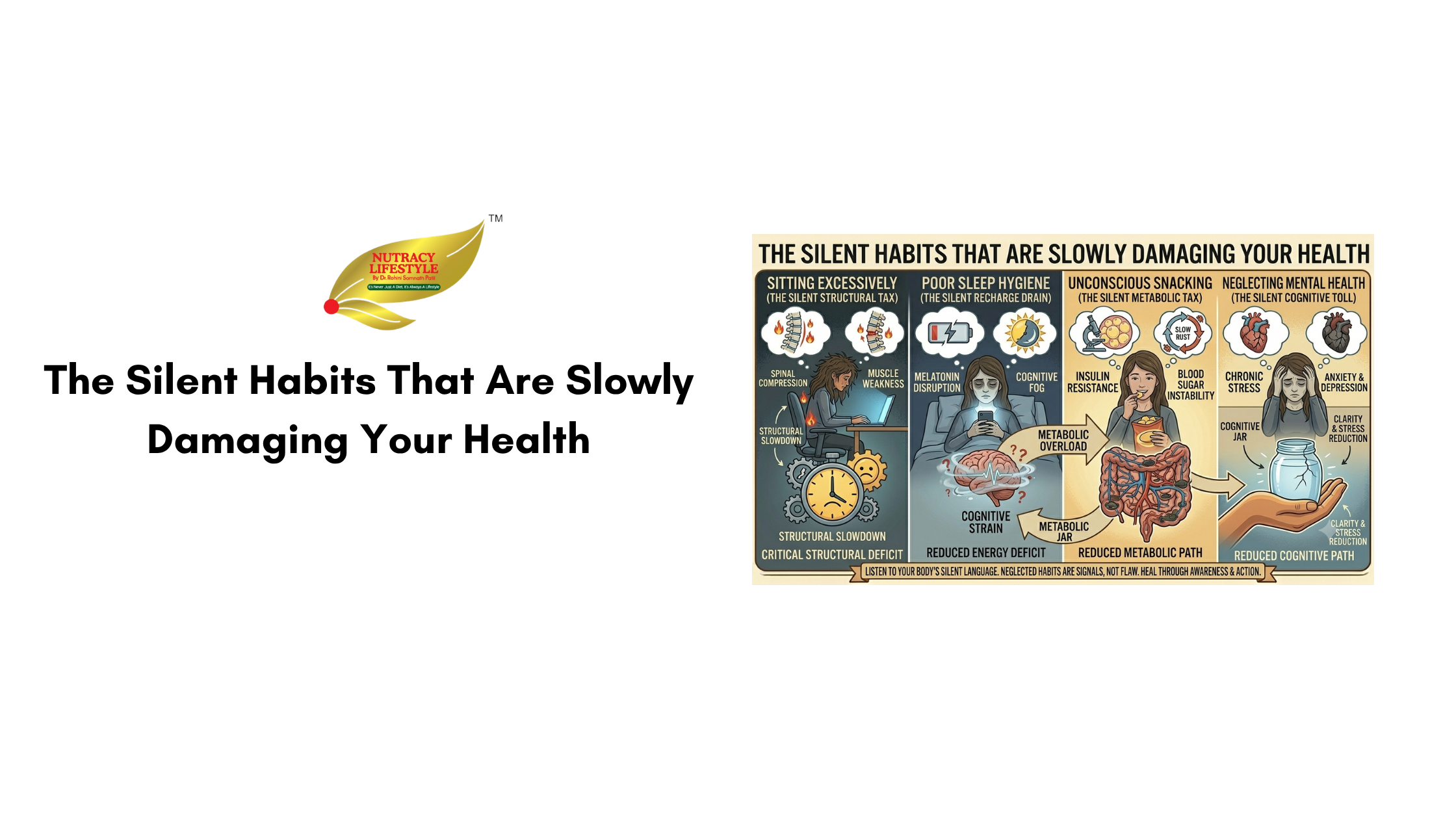
When we think about poor health, we often imagine smoking, excessive alcohol consumption, or eating junk food every day. But the truth is, many health problems don't begin with dramatic lifestyle choices. They develop quietly through small, everyday habits that seem harmless at first.
These "silent habits" slowly affect your metabolism, digestion, heart, hormones, bones, mental health, and immunity. The scary part is that you may not notice their impact until they start causing weight gain, fatigue, diabetes, high blood pressure, poor sleep, or other chronic health conditions.
The good news? Small changes today can prevent bigger health problems tomorrow.
1. Sitting for long hours
Whether you are working on a laptop, attending online classes, or scrolling through your phone, prolonged sitting has become part of modern life.
Sitting continuously for hours slows your metabolism, reduces calorie burning, weakens muscles, and increases the risk of obesity, diabetes, and heart disease. Even regular exercise cannot completely undo the effects of sitting all day.
Try standing up every 30 to 60 minutes. Stretch, walk around the room, or take a short break. These small movements improve blood circulation and reduce stiffness.
2. Ignoring sleep
Many people proudly say, "I only sleep five hours," believing it's a sign of productivity. In reality, poor sleep affects almost every organ in your body.
Lack of quality sleep increases hunger hormones, making you crave sugary and high-calorie foods. It reduces concentration, weakens immunity, increases stress, and raises the risk of weight gain and lifestyle diseases.
Adults should aim for 7–9 hours of quality sleep every night. A consistent sleep schedule is just as important as the number of hours you sleep.
3. Drinking too little water
Mild dehydration often goes unnoticed. Instead of feeling thirsty, you may experience headaches, fatigue, constipation, poor concentration, or dry skin.
Water is essential for digestion, nutrient transport, temperature regulation, and proper organ function.
Keep a water bottle nearby throughout the day and drink regularly instead of waiting until you feel thirsty.
4. Eating too fast
In today’s busy world, meals are often rushed. Eating quickly prevents your brain from recognising when you are full, making it easier to overeat.
Poor chewing also affects digestion and can lead to bloating, acidity, and discomfort.
Slow down during meals. Chew your food properly and eat without distractions whenever possible.
5. Spending too much time on screens
From work meetings to entertainment, screens dominate our daily lives.
Excessive screen time can strain your eyes, disturb sleep by affecting melatonin production, reduce physical activity, and increase stress levels.
Try following the 20-20-20 rule: every 20 minutes, look at something about 20 feet away for 20 seconds to give your eyes a break.
6. Living with constant stress
Stress is not always visible, but its effects on the body are significant.
Long-term stress increases cortisol levels, which can contribute to weight gain, poor sleep, digestive issues, high blood pressure, and weakened immunity.
Managing stress does not require complicated techniques. Daily walks, meditation, deep breathing, hobbies, spending time with loved ones, or simply taking breaks can make a meaningful difference.
7. Skipping meals
Skipping breakfast or delaying meals may seem like a quick way to lose weight, but it often has the opposite effect.
Irregular eating patterns can increase hunger later in the day, leading to overeating and unstable blood sugar levels. Over time, this may negatively affect metabolism and energy levels.
Focus on balanced meals that include protein, fibre, healthy fats, and complex carbohydrates.
8. Depending on processed foods
Packaged foods often contain high amounts of added sugar, sodium, unhealthy fats, and preservatives.
Regular consumption of highly processed foods has been linked to obesity, heart disease, type 2 diabetes, and inflammation.
Instead, choose whole foods more often: fresh fruits, vegetables, whole grains, pulses, nuts, seeds, and lean sources of protein.
Takeaway
Good health is not built overnight, and neither is poor health. The small choices you make every day – how you sleep, move, eat, hydrate, and manage stress – shape your long-term well-being.
You do not need a perfect lifestyle to become healthier. Start with one simple habit. Drink an extra glass of water. Take a short walk after meals. Sleep 30 minutes earlier. Eat without distractions.
These changes may seem small today, but over months and years, they can have a remarkable impact on your energy, mood, metabolism, and overall quality of life.
Remember, your health is not determined by one meal or one workout. It is built through the everyday habits you choose to repeat.