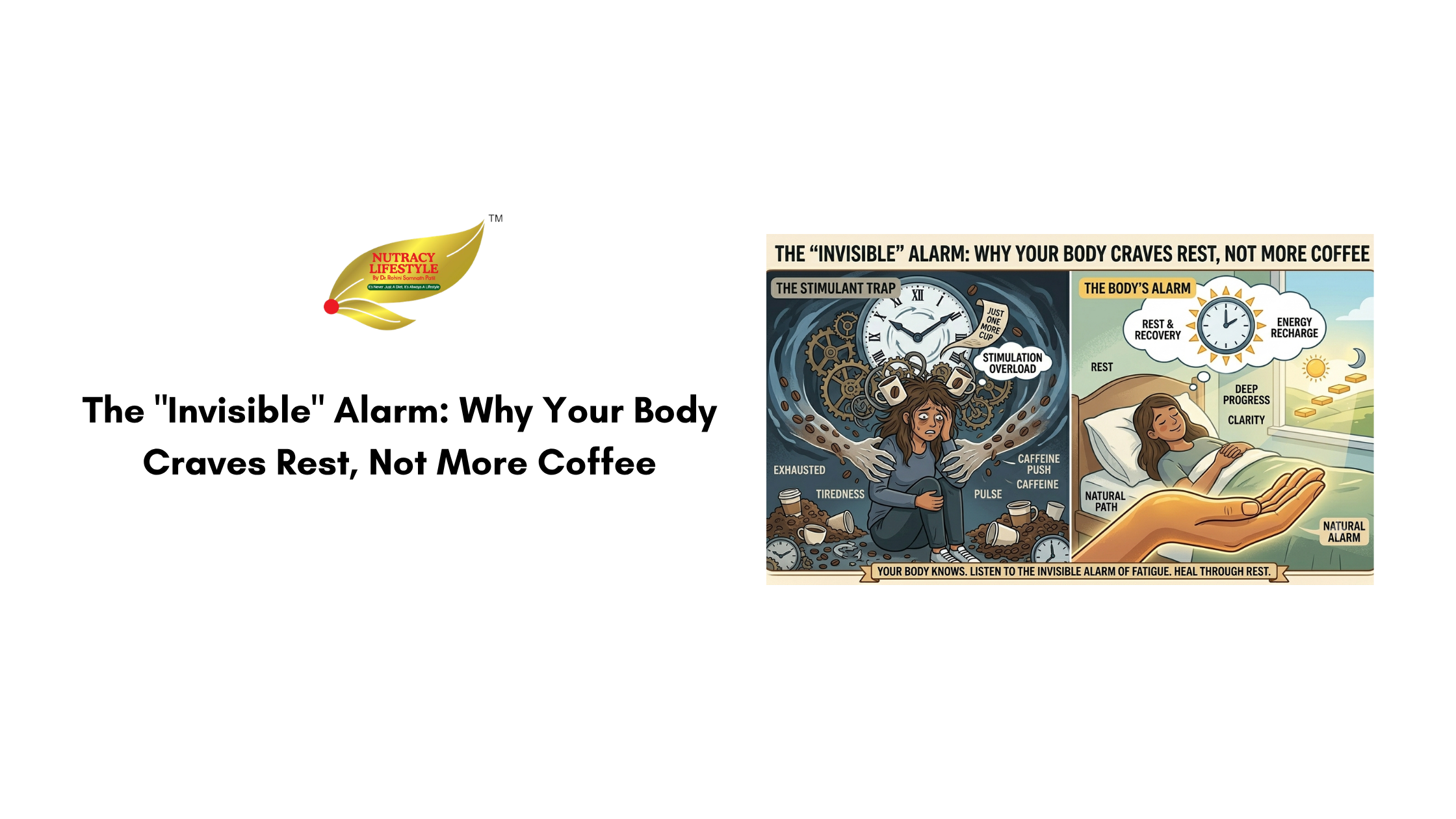
We live in a world that glorifies the push. We wear our busyness like a badge of honor, and when our energy starts to flag, we have an immediate solution: we override it. We reach for another cup of tea, a stronger coffee, or a sugary snack to blast through the afternoon slump. We treat our bodies like machines that just need another push of the accelerator.
But that afternoon slump isn’t a design flaw. It is an internal signal.
In our rush to stay productive, we have forgotten how to read our body’s most basic language. What we call "fatigue" is often just an invisible alarm telling us that our nervous system needs a brief pause, not another dose of stimulants.
The Anatomy of the Overdrive Loop
When you use caffeine or sugar to force your way through exhaustion, you aren't actually creating new energy. You are just borrowing it from the future.
Caffeine works by blocking adenosine, the chemical in your brain that signals tiredness. It tricks your brain into thinking you are wide awake while the fatigue continues to pile up in the background. At the same time, it triggers a small release of adrenaline—the "fight or flight" hormone.
When you do this day after day, your body stays in a state of low-grade panic. Your digestion slows down, your sleep becomes shallow, and you wake up on Tuesday morning feeling just as tired as you did on Monday night. You become wired but tired.
The ROI of the 10-Minute "Downshift"
The alternative to constant stimulation isn't taking a three-hour nap in the middle of the workday. It is learning how to give your nervous system a "soft reset."
By giving yourself just ten minutes of true quiet—without a screen, a book, or a conversation—you allow your nervous system to switch from the active "Sympathetic" mode into the restorative "Parasympathetic" mode. It is the biological equivalent of letting your phone sit on the charger instead of constantly running apps in the background.
Reconnecting with the Rhythm
Your energy naturally moves in waves throughout the day. Expecting yourself to have the same focus at 3 PM as you did at 9 AM is biologically impossible.
This week, instead of fighting the dip, try to lean into it with small, supportive actions:
The Air Reset: When the brain fog rolls in, step outside or open a window and take five deep, slow breaths. Oxygenation clears metabolic waste from your brain much more sustainably than caffeine.
The Hydration Check: Mild dehydration mimics the exact feelings of fatigue and low blood sugar. Before you decide you need a snack or a coffee, drink a room-temperature glass of water and wait ten minutes.
The "Brain Dump": If your exhaustion is purely mental, grab a piece of paper and write down everything bouncing around in your head. Getting the tasks out of your mind and onto paper instantly lowers the cognitive load on your brain.
The Takeaway
Your body is not your enemy, and its fatigue is not a failure of willpower. It is a highly sophisticated system trying to protect your health. This week, when the tiredness hits, don't try to out-think it or out-medicate it with caffeine. Listen to it. Give yourself permission to pause, even for just five minutes. Real energy doesn't come from a cup; it comes from respect.