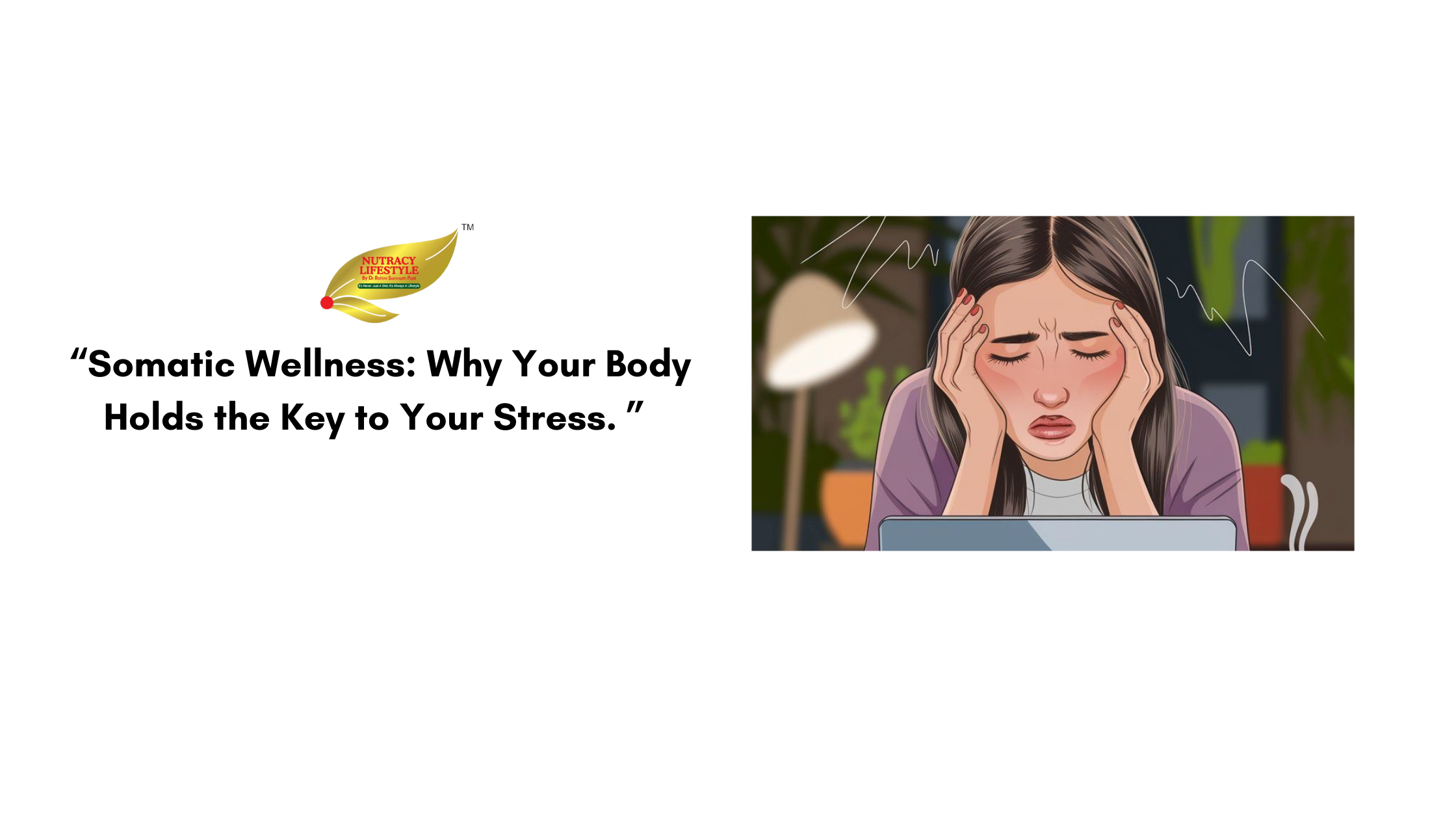
For years, when we felt stressed, anxious, or overwhelmed, the advice was always the same: think about it.
We journaled. We analyzed our feelings. We talked to ourselves through the panic. This cognitive approach is valuable, but it often misses the most important part of the equation: your body.
The latest shift in wellness—the movement toward Somatic Wellness, tells us that healing doesn't just happen in the mind; it often begins with the body.
What is Somatic Wellness?
The word "somatic" comes from the Greek word soma, meaning "of the body."
Somatic wellness is the practice of tuning into the physical sensations within your body to understand, process, and release emotional or psychological distress. It operates on a simple, yet profound, principle: Your trauma, stress, and anxiety are not just memories; they are stored as physical tension and energy in your body.
When you feel stressed, you aren't just thinking anxious thoughts. Your nervous system is physically activated:
- Shallow breath (Fight response)
- Tight jaw or shoulders (Freeze response)
- Restless legs (Flight response)
Somatic practices are the tools you use to talk directly to your body and help it complete the survival response it started.
The Nervous System is Your Operating System
Think of your nervous system as your body's alarm panel. We spend most of our busy lives in the Sympathetic Nervous System (the "fight or flight" mode). True wellness, however, is found when we intentionally activate the Parasympathetic Nervous System (the "rest and digest" mode).
When you only use talk therapy or analysis, you are talking to the alarm panel. When you use somatic tools, you are turning the alarm off using the master switch, your body.
Human-Approved Somatic Practices to Try Today
You don't need a specialist to start feeling the benefits. These simple, accessible tools bring you back into your body and signal safety to your brain:
1. The Vagal Nerve Tone (The Hum)
The Vagus nerve is the superhighway between your gut and your brain, and toning it is one of the fastest ways to hit the "reset" button.
- The Practice: Take a deep breath. As you exhale, make a low, resonant "Hmmmm" or "Aummm"sound. Do this for 60 seconds. The vibration stimulates the Vagus nerve, slowing your heart rate and calming your whole system.
2. Shaking and Tremoring
When prey escapes a predator, they physically shake to release the stored energy of the fight/flight response. Humans do this too, often without realizing it.
- The Practice: Stand with your knees slightly bent. Gently bounce or shake your entire body for 2 minutes. Let your arms flop and your head sway. This ritualistic shaking helps discharge built-up stress hormones like cortisol and adrenaline.
3. Orienting (Look Around)
When stress locks your attention onto your thoughts, your vision tunnels. Orienting reconnects you to your present, safe environment.
- The Practice: Slowly turn your head from side to side, allowing your eyes to rest on objects in the room. Don't label them or judge them; just notice them. This simple act tells your deepest brain stem, "I am safe. I have time to look around."
The Takeaway: The mind-body connection isn't just a metaphor. It's a physiological truth. Next time you feel stressed, pause your thinking. Drop into your body. What does it feel like? By learning to feel, you create space for the real release and, ultimately, real healing.