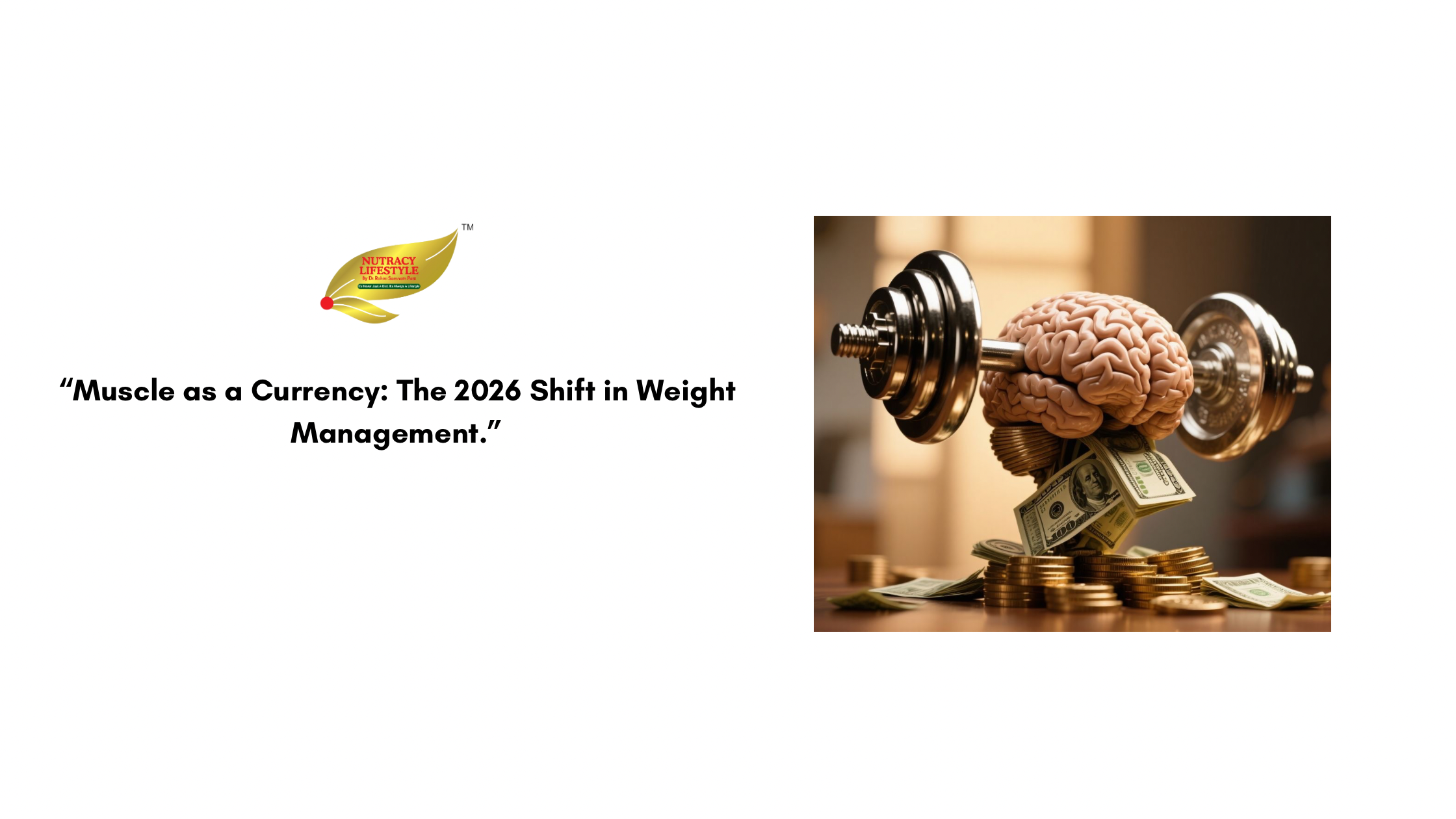
For decades, we used the scale as the ultimate judge of health. If the number went down, we celebrated. If it went up, we mourned. But in 2026, we are finally having the "Ultra-Processed Reckoning." We’ve realized that losing weight is easy, but maintaining metabolic health is hard, especially when that weight loss comes at the expense of our muscles.
Why Muscle is the New "Metabolic Gold"
As a coach, your biggest challenge right now isn't helping clients shed fat; it's helping them keep their muscle mass. With the rise of GLP-1 medications and aggressive fasting trends, people are losing weight faster than ever, but they are often losing "good" weight (skeletal muscle) alongside the fat.
The Reality: Muscle is not just for athletes. It is your largest metabolic organ. It is what manages your blood sugar, supports your joints, and keeps your immune system sharp. In 2026, we don't just "lose weight"—we optimize body composition.
The ROI of Protein (INR)
Clients often complain that "eating healthy" is expensive. But when you break down the cost of protein—the building block of that metabolic muscle—it becomes an investment in avoiding future healthcare costs.
Source | Approx. Cost (INR) | Protein per Serving | Benefit |
Whey Isolate (1 Scoop) | ₹90 - ₹120 | 24g | Fast recovery, high convenience. |
Paneer (100g) | ₹45 - ₹60 | 18g | Whole food, satiating fat. |
Lentils/Dal (1 Bowl) | ₹15 - ₹25 | 7g - 9g | High fiber, low cost. |
Eggs (2 pcs) | ₹14 - ₹18 | 12g | Complete amino acid profile. |
The Coaching Tip: If a client is on a budget, show them that for the price of one fancy café coffee (₹350), they can buy enough eggs and dal to meet their protein needs for an entire week.
The Brain-Gut Axis: Nutrition for Mental Performance
In 2026, clients are coming to us for Cognitive Wealth. They want to know why they feel "foggy" after lunch or why their anxiety spikes on Monday mornings.
We now know that the gut microbiome is essentially a factory that produces neurotransmitters like serotonin and dopamine. If you aren't feeding the factory the right raw materials (fiber and fermented foods), the "output" (your mood and focus) suffers.
The "Brain Fuel" Rule: Instead of another supplement, have your client add one fermented food (curd, kefir, or pickles) and one high-fiber vegetable to their lunch. The goal is to stabilize blood sugar to avoid the "2 PM Brain Fog."
How to Coach the "Data-Driven" Client
Many of your clients are likely wearing metabolic trackers or smart rings. These tools are great, but they can lead to "Data Stress." Your role as a coach in 2026 is to help them interpret the signals:
- Ignore the Spikes, Watch the Trends: One "bad" night of sleep or one high-sugar meal doesn't ruin a week. Help them look at 14-day averages instead of hourly pings.
- Bio-Individual Feedback: If their tracker shows their heart rate variability (HRV) is low, teach them to adjust their nutrition—maybe more hydration and fewer stimulants that day.
- The "Check-In" over the "Log": Instead of making them log every gram of food, ask them how they feeltwo hours after eating. That internal data is often more accurate than any app.
The Takeaway: Nutrition in 2026 is about building a body that is resilient to stress, age, and disease. It’s not about restriction; it’s about metabolic flexibility. Help your clients see their food as the software that runs their biological hardware.